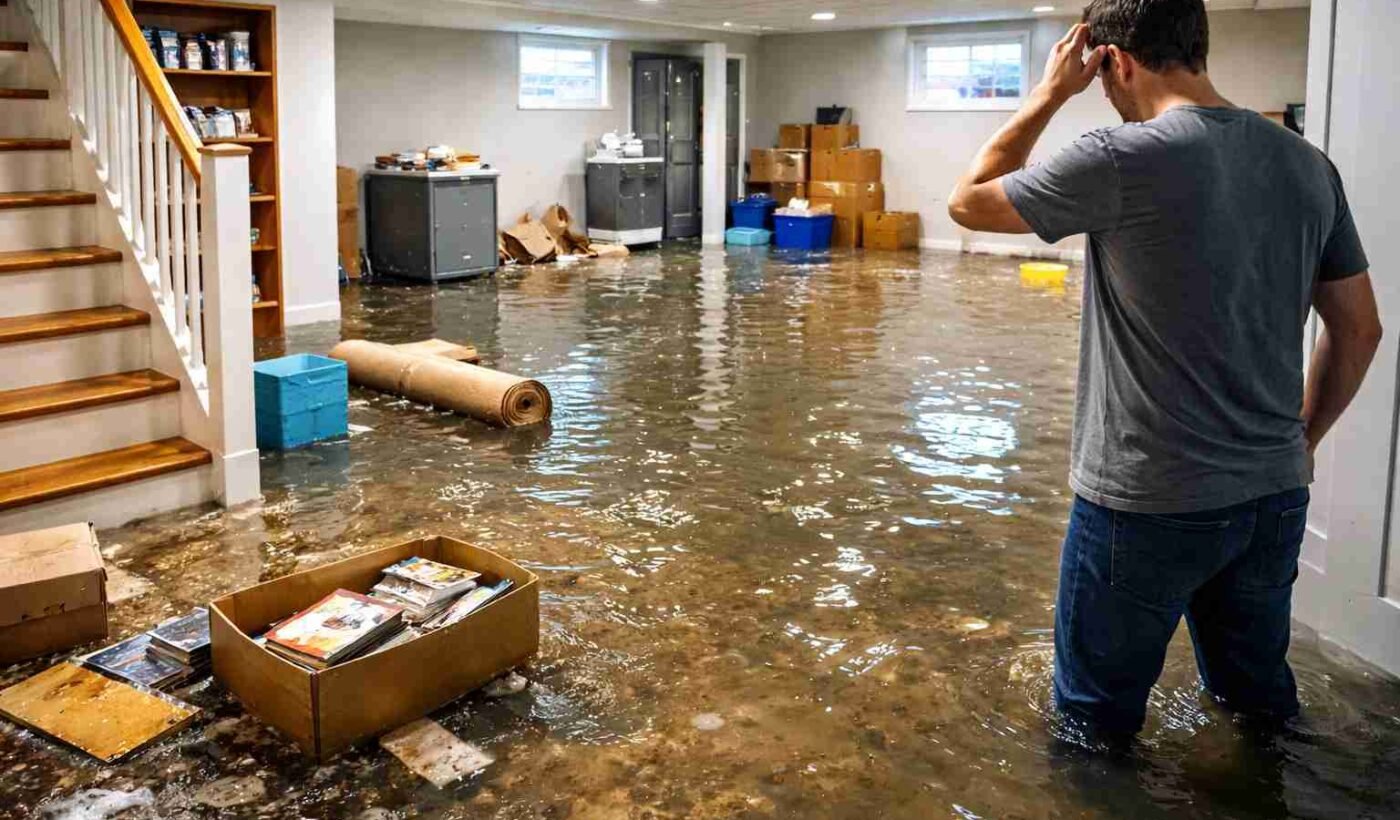
Basement water problems can range from minor dampness to serious flooding. In Dubuque, heavy rains, rapid snowmelt, and shifting soil combine with the city’s bluff topography and underlying limestone karst to drive water toward foundations in ways flat-ground Iowa communities rarely experience. Depending on the entry point, you might see anything from localized dampness to standing water. Typical symptoms include water marks, musty smell, mold growth, and wet walls.
Addressing these issues early helps protect both the foundation and the living spaces above it. Basement waterproofing in Dubuque, IA, can help identify where water is entering and provide solutions suited to the cause. Understanding the problem first makes it easier to choose the right waterproofing approach for your basement.
Water Seeping Through Foundation Walls
Wall seepage is among the more common concerns that prompts homeowners to call a waterproofing contractor. Hairline cracks in concrete or block walls let water through once hydrostatic pressure builds up in the soil after a heavy rain or a fast snowmelt.
Look for white, chalky efflorescence or peeling paint near the base of the wall. These often appear before the wall actually feels damp to the touch. Left alone long enough, moisture like this can start breaking down mortar joints.
A combination of interior drainage channels, exterior sealing, and a properly sized sump pump creates a layered defense. Interior drainage, sometimes installed as a perimeter channel system along the footing, is generally the less invasive option and avoids the excavation that exterior membrane work requires. Exterior waterproofing membrane application goes further in blocking water at the source but involves digging out the foundation perimeter, which adds significant cost and disruption. The more severe or recurring the seepage, the stronger the case for addressing it from both sides. The drainage system catches water at the wall joint, while the pump actively pushes it away from the property, preventing the hydrostatic pressure from building up again.
Grading and Drainage That No Longer Work
Many of Dubuque’s older homes were graded decades ago, and that slope away from the foundation does not always hold up as soil settles or landscaping shifts. When water pools against your foundation rather than draining away, hydrostatic pressure forces that moisture through the tiniest gaps in your concrete or block walls.
Fixing this usually means regrading the yard, extending downspouts further from the foundation, and adding exterior drain tile where needed. Waterproofing contractors in the area tend to pair this outdoor work with interior sealing, since drainage issues almost never stay confined to one spot.
Humidity and Condensation Inside the Basement
Not all moisture problems start outside. Iowa summers get humid, and when that warm air meets the cooler surfaces of a basement, condensation forms on pipes, walls, and floors. Given enough time, that moisture becomes a breeding ground for mold and odor problems that are difficult to eliminate once established.
Dehumidifiers manage the symptom but do nothing to resolve the actual source. Sizing matters here because an undersized unit will run continuously without meaningfully reducing humidity levels in a larger basement. Vapor barriers installed during a waterproofing project cut down moisture transfer through the walls. Better ventilation paired with proper sealing keeps humidity from building back up.
Cracks Forming in the Foundation Floor
Floor cracks tend to have a different cause than wall cracks. Usually it comes down to the soil beneath the slab settling unevenly, which lets water seep upward, especially during Iowa’s heavier rain stretches or a sudden thaw.
Installing an interior drainage channel around the floor’s perimeter catches this water early and routes it toward a sump system before it has a chance to spread. Where the crack itself is the primary entry point, polyurethane or epoxy crack injection can seal it directly before the drainage channel is set. Homeowners who have tried patching floor cracks on their own, only to see them reopen, usually find this approach far more reliable. It is also worth noting that sump pumps can fail during intense storms if they are undersized or lack battery backups, so regular maintenance and proper sizing are just as critical as the drainage system itself.
What to Ask a Contractor Before Work Begins
Most basement issues in Dubuque do not come from just one source, which is exactly why a proper inspection matters before jumping into repairs. Wall seepage, poor grading, humidity, floor cracks, and sump pump reliability all tend to overlap more than homeowners expect. When evaluating contractors, ask whether the proposed scope addresses interior drainage, exterior membrane protection, or both, and whether the completed work carries a transferable warranty, which is one of the more meaningful differentiators between providers in this category.
Not sure what’s causing your basement problems? Schedule an inspection with a local waterproofing professional and address the issue before it gets worse.