Florida’s hot climate, heavy rains, and severe storms can quickly turn minor tree issues into major property damage. Branches near roofs, weak limbs and unstable trunks can cause problems that are easy to miss during regular yard work.
A qualified provider offering tree service in Lakeland, FL can assess tree health, remove hazardous limbs, improve clearance around structures and recommend targeted pruning. With the right attention at the right time, homeowners can reduce preventable damage while keeping their trees healthy and appropriately sized for their surroundings.
How Lakeland Weather Can Weaken Trees
Central Florida doesn’t give trees an easy year. Long stretches of humidity encourage fungal growth, and the sandy soil common across Lakeland neighborhoods doesn’t hold roots as firmly as denser soil would elsewhere. When hurricane season arrives, trees that were already struggling underground are the first to lean, split, or come down entirely. This stress builds over months or even years before a single storm finally exposes the damage.
How Professional Tree Care Actually Protects Your Home
Trees around a home can create hidden risks, from overhanging limbs dropping debris into gutters to invasive roots threatening your foundation.
1. Pruning Cuts Down Wind Resistance
A dense, overgrown canopy acts like a sail in high wind. Thinning it out lets air pass through the branches instead of pushing against them, which takes real pressure off the trunk and root system during a storm.
2. Root Checks Catch Foundation Problems Early
Tree roots chase water, and sometimes that means growing straight toward a foundation, driveway, or septic line. An experienced crew can spot this early and manage it with root barriers, which are physical shields installed underground that can redirect growth without harming the tree.
Careful pruning can also help manage root-related risks, so the tree stays healthy without threatening what’s built around it.
3. Removal Handles What Can’t Be Fixed
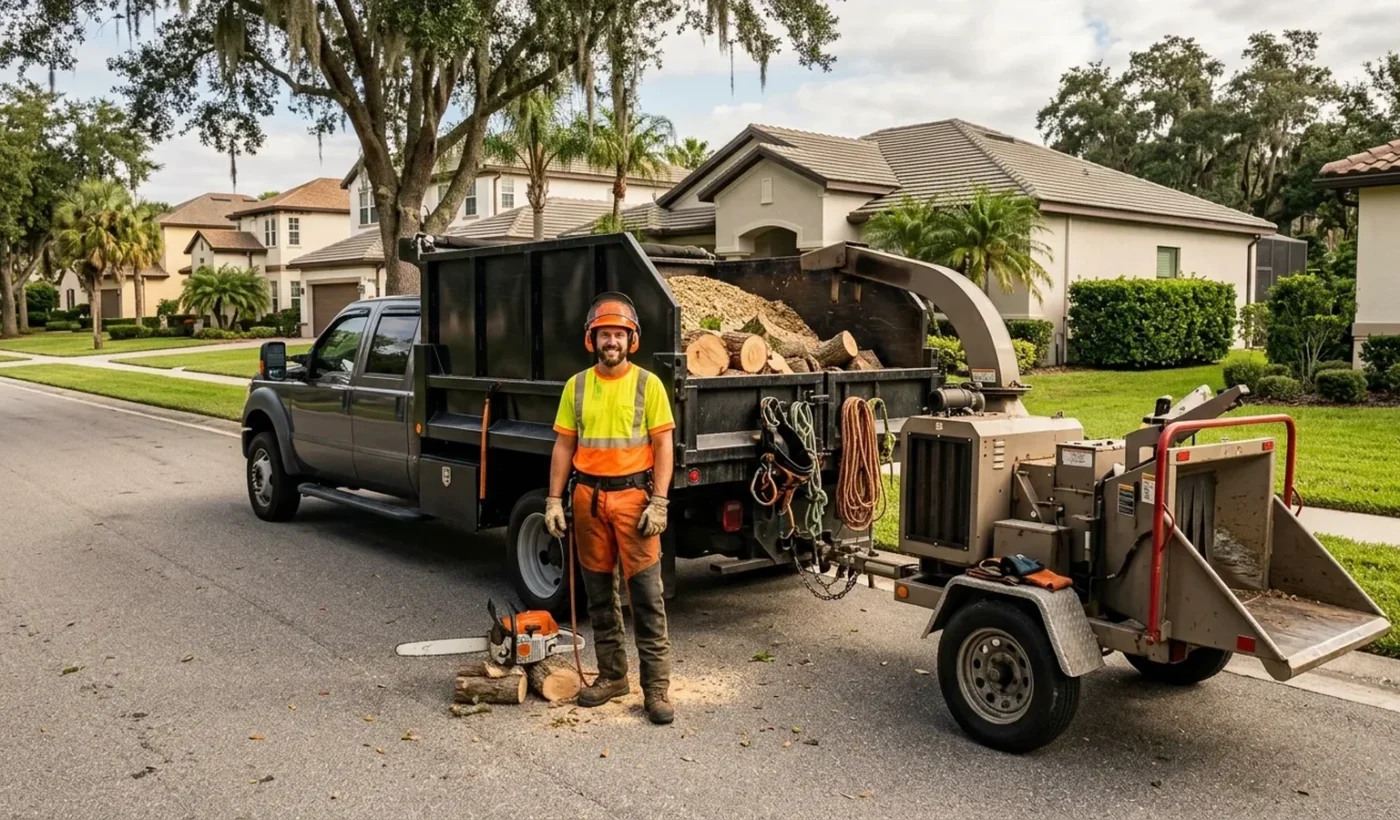
Some trees are too far gone to save, and holding onto one out of habit usually ends up costing more. Taking down a compromised tree before it fails protects your home, vehicles, and, most importantly, the safety of your family and neighbors.
After removal, homeowners should also ask about stump grinding and debris removal. Grinding the remaining stump can clear the immediate obstacle, while debris removal leaves the property ready for normal use instead of leaving branches and wood behind.
When a Tree Becomes a Risk to Your Home
Homeowners tend to notice problems only after they’ve gotten serious. A few early warning signs are worth checking:
- Bark that’s cracked, peeling, or splitting near the base
- Branches sitting noticeably lower than they did last season
- Mushroom growth or a hollow sound near the trunk
- A lean that wasn’t there before
- Limbs with no leaves while the rest of the tree is fully green
Spotting even one of these is a good reason to call in a certified arborist before the next storm, not after.
What a Reliable Crew Should Offer
Not every company handles this work the same way, so it helps to know what separates a solid crew from a rushed one:
- A full property walkthrough before any work is quoted
- Clear explanations, not just technical terms
- Proof of licensing and insurance
- A written estimate before cutting starts
- Stump grinding and debris removal after tree removal
- Availability for storm follow-up if needed
Does Lakeland Regulate Tree Removal?
Homeowners should check local requirements before removing a tree. The City of Lakeland requires a tree removal permit for regulated trees unless an applicable exception applies. City documentation also requires information such as the tree’s species and diameter for removal permit applications, so requirements can depend on the tree and the type of work involved.
For a specific property, confirm the current requirements with the City of Lakeland before work begins, particularly if the tree is large, regulated or part of development activity.
Timing Makes a Real Difference
Late winter into early spring (February to April) is the best time for major trimming. Trees are dormant and less stressed, and you’ll beat the rush of homeowners scrambling before hurricane season officially begins in June. Waiting until a hurricane watch is already posted usually means fewer options and higher prices.
Final Thoughts
A well-cared-for yard keeps limbs off your roof and roots away from your foundation. It can also reduce the likelihood of filing a claim after preventable storm damage. If it has been a while since your trees were checked, do not wait for the next warning sign.
Reach out to a trusted local crew and get an inspection scheduled before storm season puts your property to the test.