There’s something easy to overlook about the water coming from your tap. It looks clear, it fills a glass, and most days you probably don’t think twice about it. But water can contain sediment, chlorine, minerals, metals, microorganisms, or other unwanted substances that aren’t obvious just by looking at it. That’s where water filtration becomes more than a convenience. It can be a practical way to improve water quality and make everyday household water more pleasant to use.
The tricky part is figuring out what your home actually needs. A small filter under the kitchen sink may be enough for drinking water in one household, while another home may benefit from treating water throughout the plumbing system. There’s no single solution that works perfectly for everyone.
Start With Your Water, Not the Equipment
It’s tempting to shop for a filtration system based on a brand name, a long list of features, or a recommendation from a neighbor. But water quality varies significantly from one location to another, even between nearby properties.
Municipal water may contain disinfectants such as chlorine, while private well water can have issues involving hardness, iron, sulfur, sediment, or naturally occurring minerals. Old plumbing can introduce another concern, particularly when lead or other metals are present.
A water test is therefore a sensible first step. Testing can identify specific contaminants and help determine which treatment technology makes sense. Without that information, it’s easy to spend money solving a problem you don’t actually have.
What Does a Filtration System Actually Remove?
Not all filters do the same job. That’s one of the most important things to understand before buying anything.
Sediment filters, for example, are designed to capture particles such as sand, dirt, and rust. Activated carbon filters are commonly used to reduce chlorine, odors, and certain organic compounds. Reverse osmosis systems use a membrane and other filtration stages to reduce a much broader range of dissolved substances.
Water softeners are different again. They aren’t technically filtration devices. Their primary purpose is to reduce hardness minerals, especially calcium and magnesium, which can cause scale on fixtures and inside plumbing.
In other words, “filter” isn’t a catch-all term. The right technology depends on the specific water-quality issue you’re trying to address.
When Whole-Home Treatment Makes More Sense
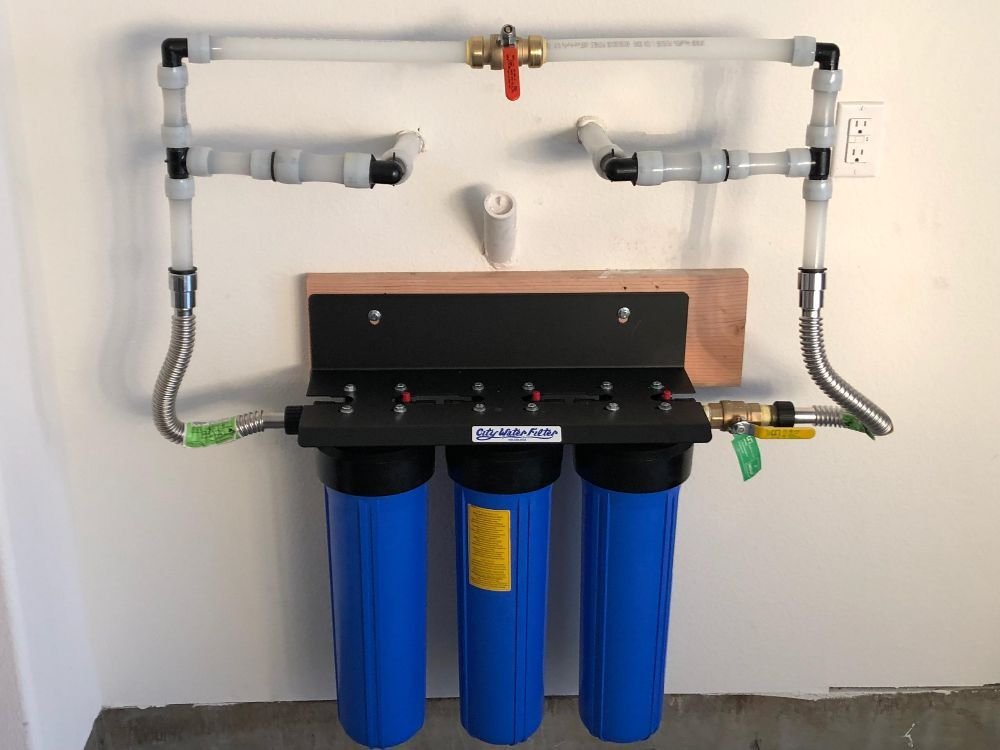
For households dealing with water-quality concerns at multiple faucets, whole house water filtration can be worth considering. Instead of treating water only at one tap, a whole-home system is installed at a central point where water enters the property.
That means treated water can reach showers, bathroom sinks, kitchen faucets, laundry appliances, and other fixtures.
This can be particularly useful when the concern isn’t limited to drinking water. Imagine stepping into a shower and noticing a strong chlorine smell, or washing clothes in water that leaves behind an unpleasant odor. Treating only the kitchen faucet won’t address those experiences.
Whole-home treatment can also provide a more consistent approach, although the system still needs to be selected according to the home’s water source and test results.
Don’t Ignore Maintenance
Even a high-quality filtration system isn’t a “set it and forget it” appliance.
Filters collect contaminants over time, which means cartridges eventually need replacement. Some systems require periodic membrane changes, sanitization, backwashing, or other maintenance. If those tasks are ignored, performance can decline, and in some cases the system can become less effective than expected.
The maintenance schedule depends heavily on the technology and the quality of the incoming water. A home with heavy sediment may use filters much faster than a home with relatively clean municipal water.
It helps to keep a simple reminder on your phone or calendar. It’s not glamorous, admittedly, but it’s far better than discovering an overdue filter when the water starts tasting strange.
Choosing Between Point-of-Use and Whole-Home Systems
Point-of-use filtration is often installed at a specific faucet or appliance. It’s a popular choice when the main goal is improving drinking and cooking water.
Whole-home systems, on the other hand, treat water before it travels through the home’s plumbing. They make more sense when water quality concerns affect several parts of the property.
Neither approach is automatically better.
If your only concern is the taste of drinking water, a kitchen filtration system might be all you need. If your household experiences sediment, odors, or other concerns at multiple fixtures, broader treatment may be more practical.
The key is matching the solution to the problem instead of buying the biggest system available.
Understanding Different Water Filter Systems
Today’s market includes many types of water filter systems, ranging from simple countertop units to multi-stage installations designed for an entire property.
When comparing options, look beyond marketing language. Check what contaminants the system is certified or specifically designed to reduce. Consider flow rate, filter replacement costs, installation requirements, available space, and expected service life.
Certification can also matter. Independent certification organizations evaluate certain products against defined standards, giving consumers a more useful reference point than vague claims such as “advanced purification.”
Cost deserves attention, too. The initial purchase price is only part of the picture. Replacement cartridges, professional servicing, electricity or water use, and eventual component replacement can affect the long-term expense.
A cheaper system isn’t necessarily cheaper to own.
Hard Water Is a Separate Conversation
Hard water is one of the most common reasons homeowners start researching treatment options. Calcium and magnesium aren’t generally something you simply “filter out” with a conventional carbon filter.
Instead, water softeners are commonly used to reduce hardness and help control scale. This can protect fixtures, water heaters, dishwashers, and other appliances from mineral buildup.
If you notice white deposits around faucets or reduced efficiency in water-using appliances, testing the water hardness can help determine whether softening is appropriate.
It’s also worth remembering that hard water and contamination are different issues. One concerns mineral content and scaling; the other may involve substances that affect taste, odor, or health. Treating one doesn’t necessarily solve the other.
A Better Way to Think About Water Quality
Good water treatment isn’t about having the most complicated equipment in the basement. It’s about knowing what’s in your water and choosing technology that addresses those specific concerns.
For some households, that could mean a simple carbon filter. Others may need sediment filtration, softening, reverse osmosis, or a combination of treatment methods. Professional water testing can remove much of the guesswork.
And honestly, that’s probably the most sensible place to begin.
Clean, pleasant water should feel ordinary. You shouldn’t have to think about every glass you pour or every shower you take. With the right information and a properly maintained treatment system, better water quality can become one of those quiet improvements you notice every day — without constantly thinking about the machinery making it possible.