There’s something reassuring about filling a glass straight from the kitchen tap. You don’t have to think twice about it, and on a busy morning, that little convenience matters. But when the water starts tasting strange, leaves marks on your kettle, or develops an unpleasant smell, it’s hard not to wonder what’s going on. You might find yourself comparing filters online, reading reviews late at night, and wondering whether you really need an expensive system.
The answer depends on your water and what you want to improve. Some households mainly want better-tasting drinking water, while others need to address sediment, mineral buildup, or particular contaminants. Understanding the difference between filtration options makes the decision less confusing and helps you avoid paying for features you may never use.
Start With What You Notice at Home
Water can give you a few clues about its condition, although those clues aren’t always enough to identify the cause. White deposits around faucets may suggest hard water. A chlorine-like taste can affect drinking water supplied by some municipal systems, while reddish stains may indicate iron. Sediment can sometimes appear as visible particles or collect inside faucet aerators.
Still, clear water isn’t necessarily free of every unwanted substance. Some contaminants cannot be detected by sight, smell, or taste. That’s why testing matters, especially when you’re concerned about health-related substances rather than simply improving the flavour.
Begin by checking your local water-quality report if your home receives a municipal supply. If you use a private well, arrange appropriate testing based on local conditions and recommendations from your health authority. A basic test may help identify hardness or pH, while specific concerns can require laboratory analysis.
Once you understand what’s present, choosing a filter becomes much more straightforward. Instead of buying a product because it has impressive packaging or dozens of advertised features, you can look for something designed to address your actual concern.
A Simple Way to Improve Drinking Water
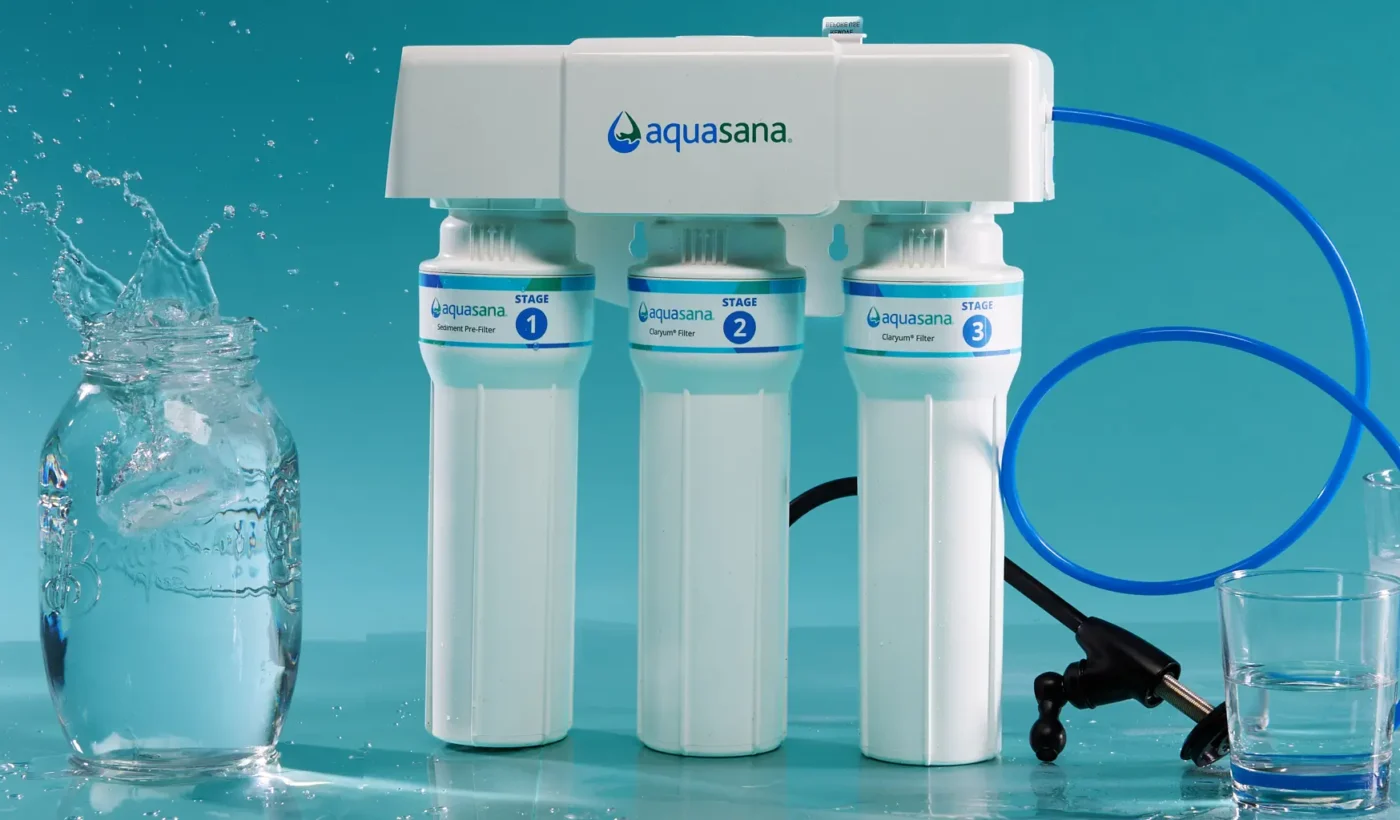
For many households, the main goal is to make drinking and cooking water more pleasant without changing the plumbing throughout the house. A filter installed beneath the kitchen sink can be a convenient option, particularly when several people regularly fill bottles, prepare tea, or cook meals at home.
Well-chosen under-sink water filters can reduce selected substances depending on the filtration technology used. Some models contain activated carbon to improve taste and odour, while others use additional stages designed for specific treatment purposes. The important question isn’t how many stages a system has; it’s what the filter has been independently tested and certified to reduce.
Before buying one, take a quick look inside the cabinet beneath your sink. Is there room for the filter housing? Will you need a separate faucet? Can you reach the cartridge easily when it’s time for a replacement? These practical details might seem minor, but they can make the difference between a system you’ll happily maintain and one that becomes a nuisance.
Flow rate matters as well. A compact unit may be perfectly adequate for a small household, while a larger family might prefer a system that supplies filtered water more quickly. Check the manufacturer’s specifications and consider how much water your household typically uses.
Understanding Activated Carbon Filtration
Activated carbon is widely used in drinking-water filters because its porous surface can adsorb certain substances as water passes through it. Depending on the media and system design, it can help reduce chlorine taste and odour, along with selected organic compounds. That can make a noticeable difference when the original water has a flavour you find unpleasant.
However, activated carbon water filtration isn’t a universal solution. Different carbon filters have different capabilities, and performance depends on the substances being targeted, contact time, capacity, and maintenance. A standard carbon cartridge shouldn’t be assumed to remove every dissolved mineral, heavy metal, or microorganism.
This distinction is especially important when you’re choosing equipment based on a particular water-quality concern. Look for clear performance information and relevant independent certifications. If you want to reduce a specific contaminant, verify that the model is certified or otherwise appropriately tested for that substance.
Replacement schedules deserve attention, too. Carbon media gradually becomes exhausted, and an overdue cartridge may no longer perform as expected. Some filters also need flushing after installation or replacement. Following the manufacturer’s instructions helps maintain performance and keeps routine care manageable.
When a Standard Filter Isn’t Enough
Not every water concern can be addressed with the same technology. A household may need to reduce a particular dissolved substance, address an unusual mineral concentration, or manage a concern identified through laboratory testing. In these situations, a general-purpose filter may not be sufficient.
Depending on the test results, specialty water filters may provide a more targeted approach. Certain products are designed to reduce specific contaminants, while other systems use technologies such as reverse osmosis or ion exchange. Each method has its own strengths, operating requirements, and limitations.
Reverse osmosis, for example, uses a semipermeable membrane to reduce many dissolved substances. It can be useful when a properly selected and certified system is appropriate for the contaminants of concern. However, conventional systems also produce wastewater and require periodic replacement of filters and membranes.
If hardness is the main issue, a water softener may be more suitable than a drinking-water filter. If testing identifies a microbiological concern, an appropriate disinfection method may be needed. These are different problems, and the treatment should match the evidence.
Be wary of products claiming to remove everything from water. No single technology should be assumed to address every possible contaminant under every condition. A reliable recommendation explains what a system can do, what it cannot do, and why it’s appropriate for your particular water.
Don’t Forget Maintenance and Long-Term Costs
Buying the filter is only the first step. Replacement cartridges, membranes, installation, and occasional servicing all contribute to the overall cost. Before making a decision, find out how often components need replacing and whether compatible replacement parts are readily available.
A simple reminder on your phone can help you keep track of maintenance dates. Pay attention to changes in water flow, taste, or odour, but don’t rely on those signs alone to judge whether a filter is still effective. Some substances cannot be detected by the senses, so follow the recommended replacement schedule and arrange further testing when appropriate.
Installation should be considered as well. Some under-sink units are designed for straightforward installation, while others require plumbing modifications. If you’re uncertain about the connections or the manufacturer’s requirements, professional installation may be the safer option.
Make a Choice That Fits Your Household
The best filter isn’t necessarily the most expensive one or the model with the longest list of features. It’s the one that addresses your water-quality needs, fits your available space, and remains practical to maintain.
Start with reliable information, compare verified performance claims, and think about how your family uses water every day. Ask questions before buying, especially if a recommendation involves a significant investment.
Good drinking water should feel like a simple part of home life, not another complicated project. With a little research and the right equipment, you can make a thoughtful choice that improves convenience and addresses the water concerns that matter most to your household.